

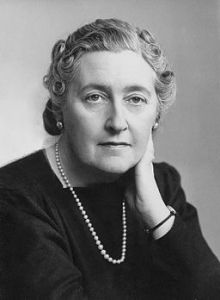
Everyone has heard of Agatha Christie. She wrote during the golden age of detective fiction, and she’s been crowned as the Queen of the Cozy Mystery. She’s written at least 74 books, including “Murder on the Orient Express”, “And then there were none”, and “Death on the Nile”. But there’s one mystery that she didn’t write. Instead, she lived it.
On December 3, 1926, Agatha Christie went into her seven-year-old daughter Rosalind’s bedroom in their home in Berkshire, England, and she kissed her on the cheek goodnight. Then, she got into her car and drove away. She wouldn’t be discovered for another ten days. Not only did she go missing for ten days, but when she was found, she claimed to have absolutely no memory of where she’d been or what she’d done.
Before her disappearance, Agatha Christie was having trouble, and it’s been speculated that she was suffering from depression. Her husband, Archibald Christie, a WWI fighter pilot, was leaving her for his mistress. Her mother’s death was taking a toll on her mental health, and she was suffering from a loss of appetite and was having difficulty sleeping.
During the time of her disappearance, many believed that she had committed suicide. Her car was found abandoned by an old natural spring called “The Silent Pool” where tragedy had struck not long before. Many speculated that she had drowned herself.
Famous authors such as Sir Arthur Conan Doyle and Dorothy Sayers got involved in trying to find the elusive mystery author. Sir Arthur Conan Doyle, who was fascinated by the occult, brought her glove to a medium. The medium didn’t have luck finding her–but maybe that was because she wasn’t dead.
Eleven days later, a fellow writer saw her and recognized her at a hotel in Harrogate, North Yorkshire. She was staying at the hotel under the alias “Teresa Neele”. She had no idea who she was, or what she had been doing the last eleven days. She must have seen pictures of herself in the newspapers, yet she did not recognize that she was the infamous mystery author who’d gone missing.
I don’t believe that she did it for publicity. Her previous book “The Murder of Roger 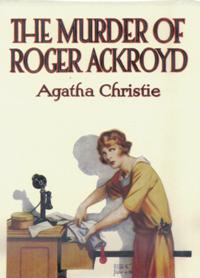 Ackroyd” was doing quite well. Of course, the book she released following her disappearance made twice as many sales. But is that a good enough reason to do what she did? Would a mother disappear on her daughter, without a trace, just to make a little more money? By the same token, would she disappear on her husband for revenge, leaving her daughter to wonder where she was? One of the most popular theories is that she did this in order to take revenge on her husband, so that he would know what it was like to be suspected by the police, and so that he wouldn’t be able to whisk his mistress away for a romantic weekend getaway. It seems like this is a pretty extreme way to keep your husband from a weekend of debauchery. This theory could make sense–but for the fact that Agatha had a daughter. I would like to know how seven-year-old Rosalind had handled her mother’s disappearance and apparent suicide. Was she unexpectedly calm during the entire thing? Is it possible that Agatha told her she would be back and to keep this secret? I can’t imagine Agatha would have simply disappeared on her daughter if she’d been of a sound mind. I wasn’t able to find any articles or interviews that mentioned how Rosalind reacted to all of this. If you have found an article that comments on her being distraught (or not) – please link to it in the comments.
This brings me to the final theory. Agatha Christie had been emotionally distraught during this time in her life. But could she have gone into a fugue state, as many psychologists have theorized? Dissociative fugue, which was previously called “fugue state”, is an extremely rare condition in which the individual suffers temporary memory loss–forgetting not only who they are, but losing other key characteristics–such as personality. Those suffering from dissociative fugue also travel far away from home. This is a real condition, which has been studied by medical doctors and psychologists alike. If you’d like, you can read an interesting study of such a case in a Nigerian medical student.
So what do you think is the answer to this decades-old mystery? Was Agatha Christie seeking revenge on her husband, or was she suffering from dissociative fugue? Or maybe she was just researching police response times for her next novel. I suppose we’ll never know…

 BibliOccult